
Build an Efficient Marketing Machine
Formula 1 fans might have a head start in building great marketing strategies

As usual, we start with what happened this week and the tool of the week before we delve into how we build real marketing machine. A lot happening in marketing this week with the Super Bowl crowning either Kansas or San Francisco and an advertiser who will leave his mark over the event. We will find out who on Monday.
This week’s press
Uber Eats revisits Beckhams viral moment with humour for their Super Bowl Ad: Uber Eats' Super Bowl commercial features David and Victoria Beckham humorously referencing a viral moment from their Netflix documentary, where Victoria's claim of a working-class upbringing is debunked by David revealing her dad drove a Rolls Royce. This clever ad plays on Victoria's "forgetfulness," tying back to a relatable pop culture moment.
Amazon and Reach forge innovative ad partnership amid Google's cookie phase-out: Amazon has partnered with British publisher Reach to gather targeted ad data, as Google phases out tracking cookies. This innovative collaboration, highlighted by the Financial Times, aims to navigate the challenges of losing cookie-based user activity tracking, crucial for targeted advertising. Amidst Google's cookie removal from Chrome and regulatory scrutiny from the UK's Competition and Markets Authority, Amazon and Reach focus on sharing "contextual" first-party data, enhancing targeted advertising capabilities
E.l.f. Cosmetics embraces mixed-reality with Apple Vision Pro App: E.l.f. Cosmetics was quick to launch "your best e.l.f.," a pioneering beauty shopping app on Apple's newly released Vision Pro headset. As one of the first beauty brands to venture into mixed-reality, E.l.f. offers users a unique experience with relaxing activities, guided meditations, and interactive games, all within environments inspired by their iconic products. This move comes as Apple Vision Pro's launch sees significant consumer and brand interest, with E.l.f. aiming to deepen engagement with immersive and interactive shopping experiences.
Tool of the week: Northbeam
Northbeam ensures multi-touch attribution and media mix modeling which are becoming more and more essential for marketers as we move away from 3rd-party cookies. It is an ideal tool for performance marketing because it adapts to privacy changes by relying on first-party data and DNS level tracking, ensuring data accuracy even with third-party cookie deprecation. It offers infinite lookback windows and models emphasizing top-of-funnel intent, aiding in new customer acquisition. Additionally, Northbeam's flexibility in payback and conversion lookback timeframes helps performance marketer understand and forecast campaign performance effectively.
Building an Efficient Marketing Machine
In marketing, achieving a harmonious blend of content creation and distribution mechanisms is akin to perfecting the fuel and engine of a high-performance vehicle. This analogy serves as a beacon, guiding marketers away from the labyrinth of ever-evolving jargon and complex frameworks towards a clearer understanding of building an effective marketing machine.
This analogy has also been used by Lenny Rachitsky which is illustrated below:
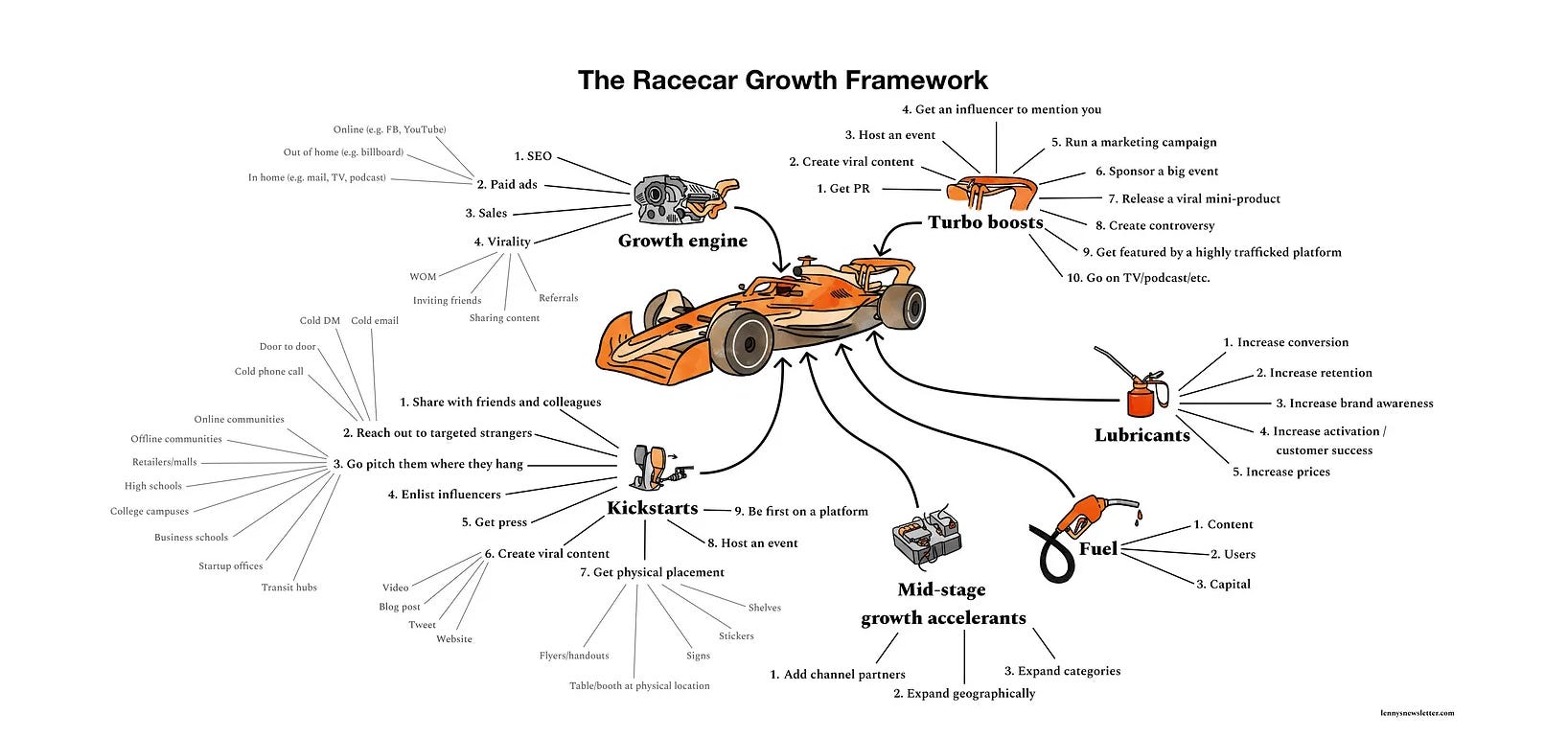
The Symbiosis of Content and Distribution
It begins with recognizing the dual components critical to any marketing strategy: the content (fuel) and the distribution channels (engine). The fuel encompasses everything communicated to your audience—be it through the written word, visual imagery, or multimedia. The engine represents the mechanisms and platforms that propel this content into the audience's realm, accompanied by the tools and metrics that measure success.
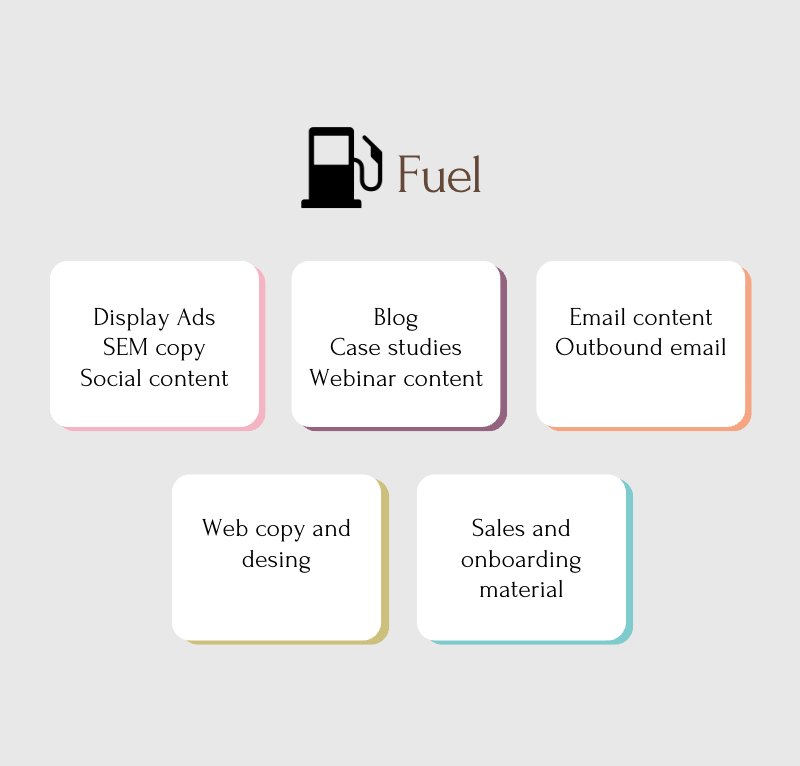
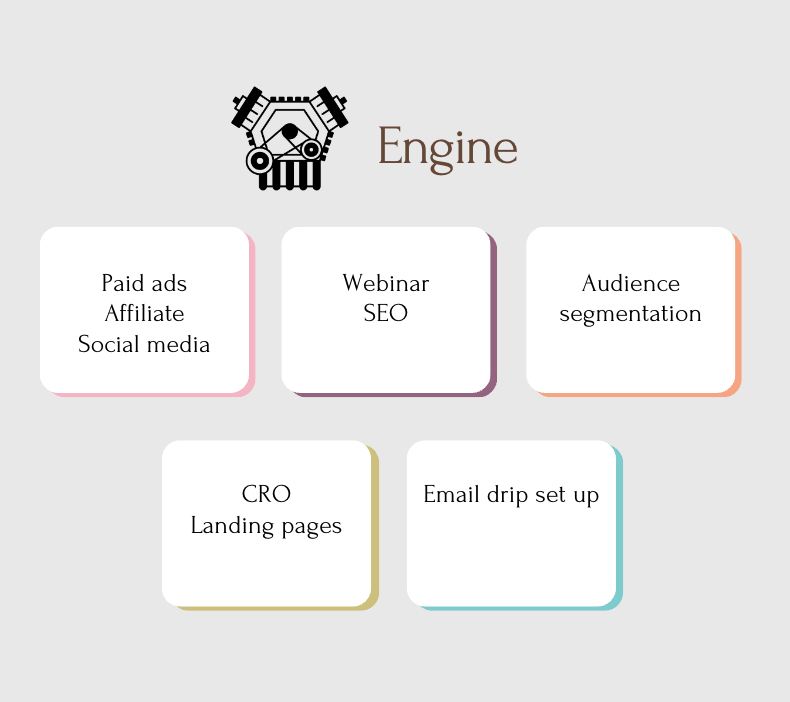
However, the equilibrium of these components often tilts, leading to an overemphasis on one at the expense of the other. Identifying and rectifying this imbalance is crucial for not just fostering growth but also for diagnosing and remedying growth impediments.
Strategizing for Harmony: Fuel-Engine Dynamics
Achieving a balance requires a strategic approach, starting with goal setting that equally weighs both content creation and distribution efforts. It involves adopting frameworks like the GACCS (Goals, Audience, Channel/Distribution, Creative, Stakeholders) to ensure each piece of content is paired with a robust distribution plan. To know more about GACCS, I have this template ready to use for you.
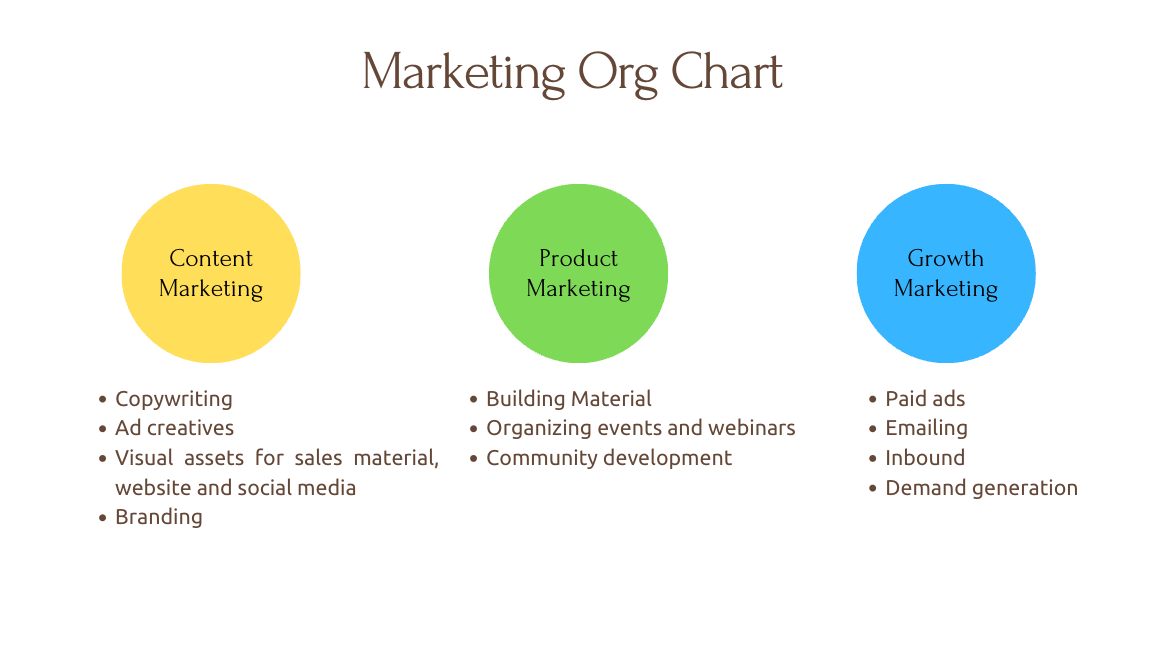
Building a team with a diverse skill set is equally important. A blend of individuals focused on either content creation, distribution, or those adept at both is essential for a well-rounded marketing function. Product Marketing Managers (PMMs) often play a pivotal role, bridging the gap between content marketing (fuel) and growth marketing (engine), making them ideal early hires.
Navigating Through Common Pitfalls
Even with a strategy in place, marketers may encounter common fail modes, such as an "Empty Tank" scenario where there's too much focus on distribution with not enough compelling content. Imagine a scenario where a company focuses solely on SEO and PPC campaigns without developing quality content. Despite increased traffic, the lack of engaging content leads to low conversion rates. To avoid this, the balance between attracting visitors and offering valuable content is crucial.
Or a "Check Engine Light" situation where content creation overshadows distribution efforts. Consider a business that produces excellent blog posts and videos but lacks a strategy for distribution. Without SEO, social media sharing, or email marketing, the content remains unseen by the target audience, limiting its impact.
Sometimes, there's a mismatch between the content and the channels used for distribution, leading to ineffective marketing despite having valuable content and a functional distribution network. An example would be a tech company creates in-depth technical whitepapers (fuel) but uses Instagram (engine) for distribution, a platform where its audience seeks visual, lighter content. This mismatch results in poor engagement and wasted resources.
The Road Ahead
Understanding and applying the fuel-engine concept in marketing strategies not only demystifies the process of building a successful marketing function but also enhances cross-functional communication. It serves as a foundational principle that, when embraced during hiring, planning, and execution phases, significantly boosts the efficiency and impact of marketing efforts.